
As winter deepens, many households face a dilemma: maintaining indoor warmth leads to stale air, while opening windows for ventilation causes heat loss. This predicament not only affects living comfort but may also pose health risks. It is precisely against this backdrop that modern tilt and turn systems, originating from Europe, are demonstrating their unique value. This innovative aluminum window design ingeniously balances insulation and ventilation, offering an elegant solution for winter indoor environment management.
Traditional windows' single operation modes can no longer meet modern living requirements. When outdoor temperatures plummet, large openings of sliding windows cause rapid heat loss, while fully opened casement windows may pose safety hazards. In contrast, tilt and turn window designs offer two distinct yet complementary operation modes, allowing users flexible choices according to different situations, achieving precise control over indoor microclimates.
Engineering wisdom
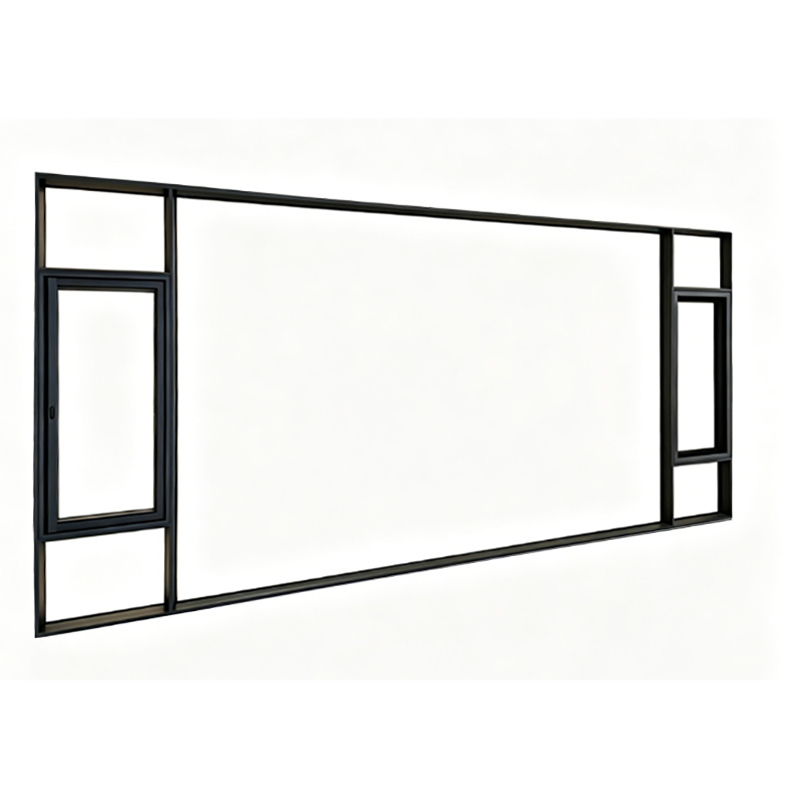
The core technology of tilt and turn systems lies in their precision hardware transmission mechanisms. Through unique operating handles, users can achieve two completely different opening modes:
Tilt Mode: When the handle rotates to a specific angle, the window sash tilts inward approximately 10-15cm at the top while remaining closed at the bottom. This creates a continuous ventilation gap that:
lEnables 24-hour continuous ventilation without manual monitoring
lEffectively prevents rainwater intrusion, allowing safe use even in rain or snow
lMaintains gradual temperature transition between indoors and outdoors, avoiding direct cold drafts
lProvides top-to-bottom air circulation, promoting stale air expulsion
Turn Mode: With the handle fully rotated, the window sash opens completely inward like traditional casement windows. This mode is suitable for:
lOccasions requiring rapid air exchange
lConvenient window cleaning and maintenance operations
lEmergency use as a safety exit
The core advantage of this dual-operation mechanism lies in its adaptability. On cold mornings, the tilt and turn micro-ventilation mode can be used; during midday when rapid air exchange is needed, the sash can be fully turned; in the evening when insulation is restored, it can be easily closed. Throughout this process, high-quality aluminum window sealing systems ensure perfect airtightness after each operation—a technical achievement difficult for ordinary windows to match.
Material innovation
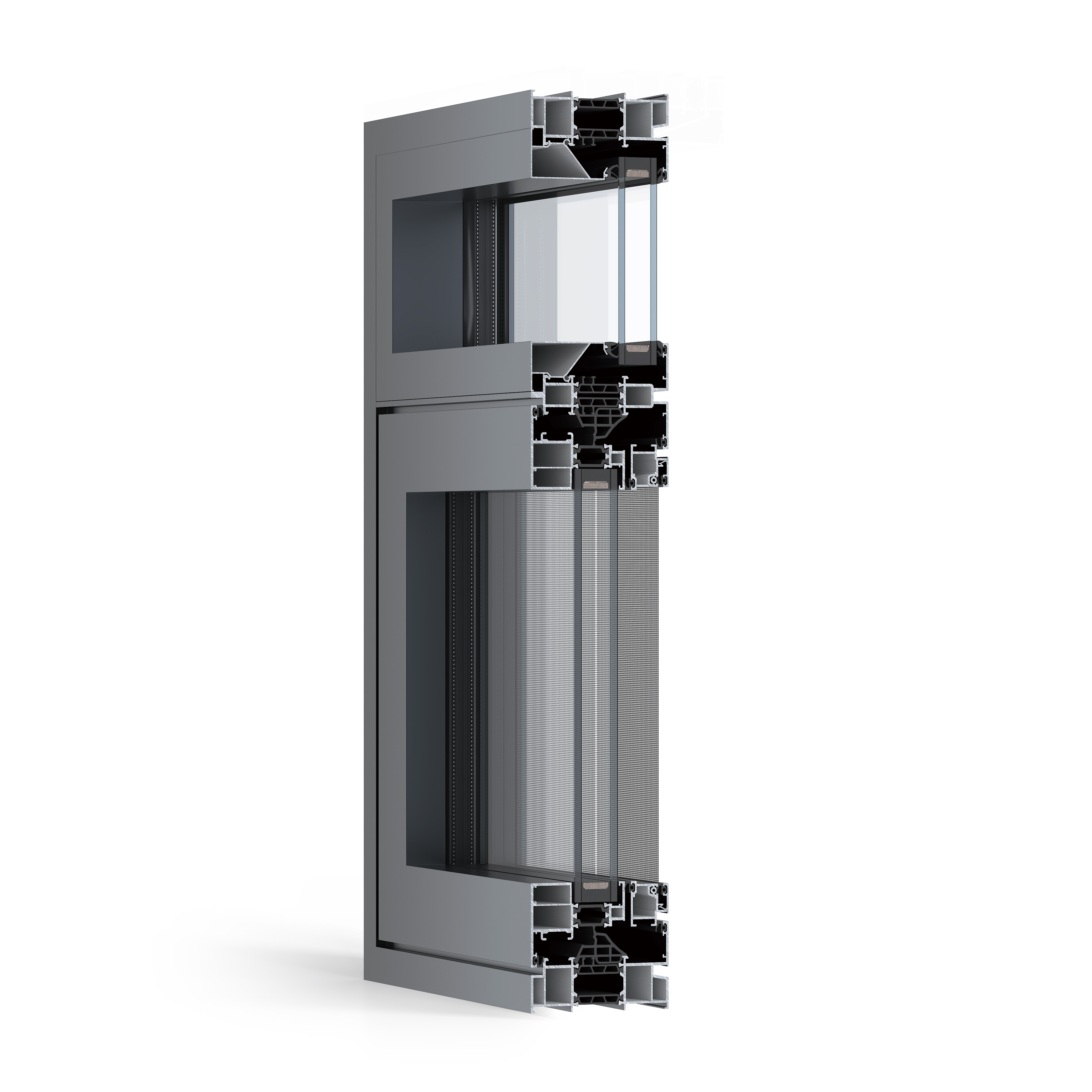
Excellent tilt and turn window designs rely on advanced material support. Modern aluminum window systems employ multi-chamber thermal break structures, with thermal performance exceeding traditional single-chamber profiles by over 60%. More importantly, aluminum profiles' strength characteristics enable window sashes to withstand complex mechanical requirements—ensuring stability during tilt mode while maintaining smooth operation when fully turning the window.
At the manufacturing level, professional tilt and turn systems require micron-level precision. The fitting clearance between window frames and sashes must be controlled within 0.3mm to ensure even compression of dual sealing gaskets. This precision requirement dictates that only CNC machining center-produced aluminum window can achieve long-term performance stability. Practice shows that after ten years of use, high-quality tilt and turn systems experience airtightness degradation not exceeding 15%, whereas ordinary windows often exceed 40%.
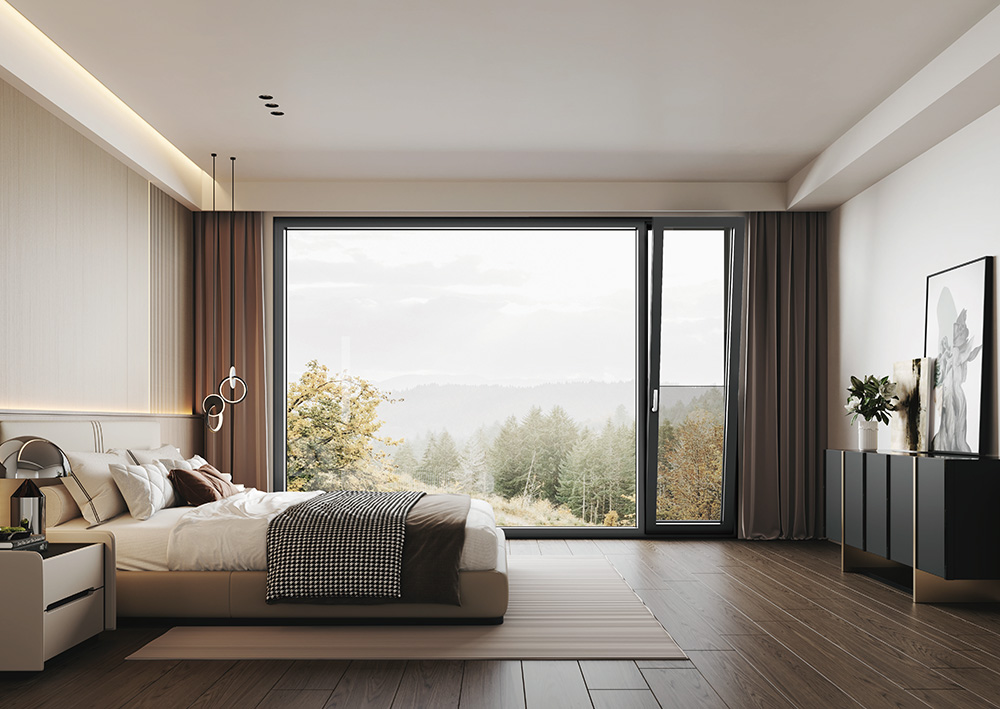
While tilt and turn systems excel in winter performance, their value extends far beyond. Tilt ventilation during spring pollen season filters most allergens; micro-ventilation on summer nights promotes heat dissipation without affecting air conditioning efficiency; fully turning the window mode in autumn facilitates outer glass cleaning. This all-season adaptability makes tilt and turn window designs truly intelligent building skins.
From an investment return perspective, while high-quality aluminum window systems have higher initial costs, their energy-saving benefits are significant. Taking Beijing as an example, residences using tilt and turn systems can reduce winter heating energy consumption by 18-25%, equivalent to saving 3.2kg of standard coal per square meter annually. More notably, as building energy efficiency standards improve, such high-performance windows are transitioning from premium options to essential configurations. Early investment translates to higher future asset value.
The next time you face winter ventilation challenges, perhaps you should reconsider this seemingly ordinary architectural element. A well-designed tilt and turn system not only solves current ventilation problems but also lays the foundation for living experiences over decades to come. In this era of increasingly precious energy, choosing aluminum window that intelligently responds to climate changes represents not only an investment in living quality but also an assumption of environmental responsibility.
