

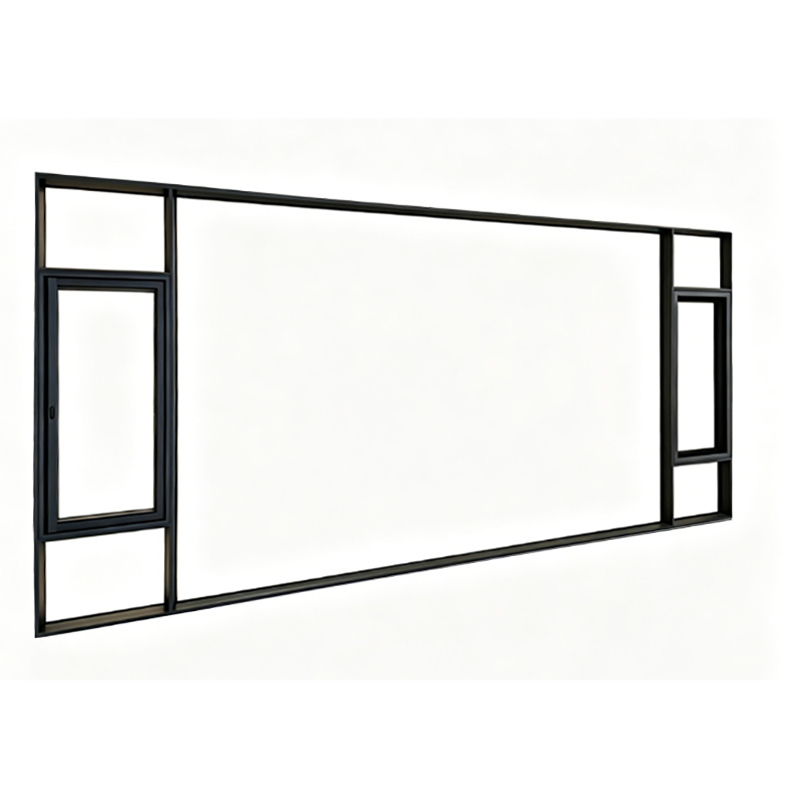
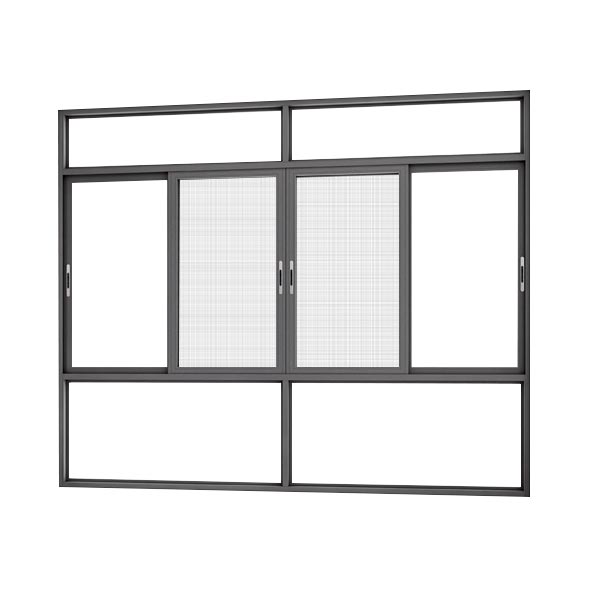
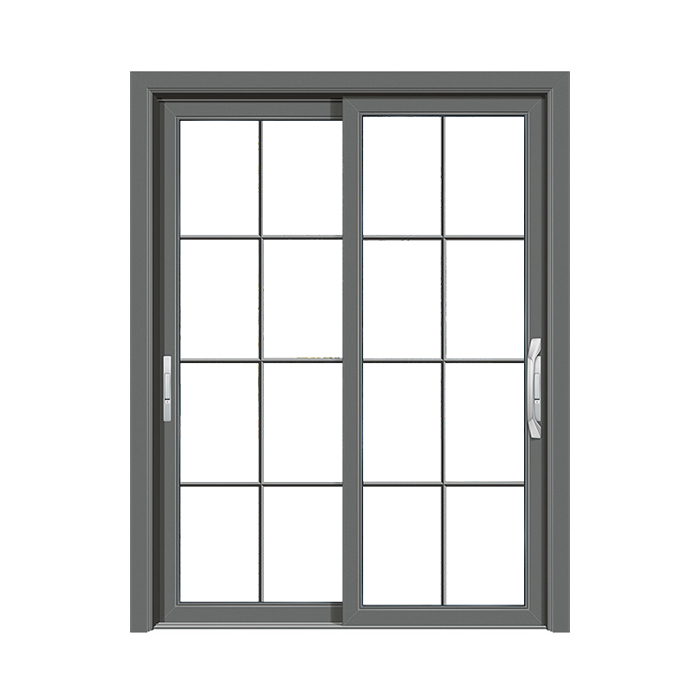
Welcome to the most comprehensive B2B sourcing guide for aluminum windows, written from the perspective of a senior sourcing and manufacturing engineer with over a decade of experience. This guide is designed for wholesalers, brands, and importers in Europe and North America who are looking to optimize their supply chain, reduce costs, and ensure product quality. We will dive deep into technical specifications, manufacturing processes, quality control, and supplier evaluation—all backed by data and real-world case studies. Let's cut through the noise and get straight to what matters.
Introduction: The Current State of the Global Aluminum Window Market
The global aluminum window market is projected to reach USD 68.5 billion by 2027, growing at a CAGR of 5.2% (Statista). China remains the world's largest producer and exporter, accounting for over 35% of global output. However, not all suppliers are created equal. Many buyers fall into traps that lead to delays, quality issues, and hidden costs. This guide will help you navigate the complexities and make informed decisions.
1. Buyer Pain Points: 3 Hidden Manufacturing Traps Only Insiders Know
Trap 1: Substandard Thermal Break Materials
Many suppliers use low-cost polyamide strips that fail under thermal cycling, leading to window deformation and energy loss. Always demand test reports for thermal break tensile strength (≥80 MPa per ISO 9001).
Engineer's Pro-Tip: Ask for a cross-section sample and measure the thermal break width. A minimum of 24mm is recommended for European standards.
Trap 2: Inconsistent Wall Thickness
Chinese national standard GB/T 8478-2020 requires a minimum wall thickness of 1.4mm for aluminum window frames. However, some suppliers use 1.2mm to cut costs, compromising structural integrity. Insist on random thickness checks during IQC.
Engineer's Pro-Tip: Use an ultrasonic thickness gauge to verify at least 5 points per profile. The tolerance should be ±0.05mm.
Trap 3: Surface Coating Failures
Powder coating or anodizing defects often appear after 1-2 years due to poor pretreatment. A salt spray test (per ASTM B117) should exceed 1000 hours for coastal projects. Avoid suppliers that cannot provide third-party coating certificates.
2. Technical Specifications: Core Parameter Comparison and Selection Guide
When selecting aluminum windows for B2B projects, the following parameters are critical:
| Parameter | Standard Grade | Premium Grade | Notes |
|---|---|---|---|
| U-Value (W/m²K) | ≤2.8 | ≤1.4 | Lower is better for insulation. Use thermal break profiles and double/triple glazing. |
| Air Permeability (m³/h·m²) | ≤1.5 (Class 4) | ≤0.5 (Class 6) | Tested per EN 12207. Higher class indicates better sealing. |
| Water Tightness (Pa) | ≥250 (Class 4) | ≥600 (Class 7) | Critical for rainy climates. Drainage systems must be designed with pressure equalization. |
| Wind Load Resistance (kPa) | ≥1.5 | ≥3.0 | Based on building height and location. Use reinforced profiles for high-rise. |
| Profile Wall Thickness (mm) | 1.4 | 1.8 | Per GB/T 8478. Thicker profiles enhance strength and durability. |
| Thermal Break Material | PA66+GF25 | PA66+GF30 | Glass-fiber reinforced polyamide. Ensure ≥25% glass fiber content. |
Engineer's Pro-Tip: For projects in cold climates (e.g., Scandinavia), specify a U-value ≤1.0 W/m²K with triple glazing and warm-edge spacers. For tropical regions, prioritize water tightness and UV-resistant coatings.
3. Manufacturing & Quality Control: IQC, IPQC, OQC Processes
A reliable supplier follows a structured QC system. Here’s what you should expect:
Incoming Quality Control (IQC): Raw aluminum billets are inspected for alloy composition (6063-T5/T6 per ASTM B221) and surface defects. Thermal break strips undergo tensile and thermal cycling tests. Glass panels are checked for optical distortion and edge sealing.
In-Process Quality Control (IPQC): During extrusion, profile dimensions are monitored every 30 minutes using CMM (Coordinate Measuring Machine). Wall thickness is verified with ultrasonic gauges. Cutting, drilling, and assembly are checked for alignment and tolerances (e.g., frame squareness ≤2mm diagonal difference).
Outgoing Quality Control (OQC): Finished windows undergo 100% visual inspection, air/water infiltration tests (sample rate: 5% per lot per EN 12207), and functional checks (opening/closing cycles). A final random sample (10%) is sent for third-party testing if required.
Engineer's Pro-Tip: Request a QC checklist and insist on witnessing random inspections during your factory visit. Many top suppliers, like Foshan Curma Building Materials Aluminum Co., Ltd., provide real-time video monitoring of key QC stations.
4. Supplier Comparison: Multi-Dimensional Screening Matrix
Use the following criteria to evaluate potential suppliers. Score each on a scale of 1-5 (5 = best).
| Criteria | Weight | Supplier A | Supplier B | Supplier C |
|---|---|---|---|---|
| Production Capacity (sq.m/month) | 15% | 5 (40,000+) | 3 (15,000) | 4 (25,000) |
| Certifications (ISO 9001, CE, etc.) | 20% | 5 (ISO, CE, AS/NZS) | 3 (ISO only) | 4 (ISO, CE) |
| R&D Capability (patents, designs) | 10% | 5 (200+ patents) | 2 (10 patents) | 3 (50 patents) |
| Lead Time (weeks) | 15% | 4 (4-6 weeks) | 3 (6-8 weeks) | 4 (5-7 weeks) |
| Quality Control (IQC/IPQC/OQC) | 25% | 5 (Full traceability) | 3 (Basic QC) | 4 (Third-party audits) |
| Price Competitiveness (per sq.m) | 15% | 4 (Medium) | 5 (Low) | 3 (High) |
| Total Score | 100% | 4.7 | 3.2 | 3.7 |
As an example, Foshan Curma Building Materials Aluminum Co., Ltd. scores highly due to its 26 years of experience, 3 factories with 1000+ workers, 40,000 sq.m monthly capacity, and 200+ patented designs. Their email is jenna@curmawins.com, phone: +86-13928224893.
5. Procurement Policy: MOQ, Lead Time, Payment, Customization
MOQ: Typical MOQ for aluminum windows is 100-200 sq.m per model. For custom colors or special profiles, MOQ may be 500 sq.m. Curma offers flexible MOQ for trial orders (50 sq.m).
Lead Time: Standard lead time is 4-6 weeks from deposit receipt. For large projects (>1000 sq.m), allow 8-10 weeks. Always factor in shipping time (sea freight: 25-35 days to Europe/US).
Payment Terms: Common terms are 30% deposit by TT, 70% balance before shipment. LC at sight is accepted for large orders (≥USD 100,000). Curma offers LC for established buyers.
Customization: Leading suppliers provide design support, 3D drawings, and prototyping. Curma has a dedicated R&D team that can develop custom profiles, colors (RAL), and hardware options.
6. Real-World Case Studies
Case 1: German Wholesaler – Cost Reduction of 22%
A German wholesaler switched from a local supplier to Curma for a 5,000 sq.m project. By using Curma's thermal break profiles (U-value 1.2) and optimizing frame design, they saved 22% on material costs while meeting Passivhaus standards. Lead time was 5 weeks vs. 12 weeks locally.
Case 2: UK Housing Developer – Defect Rate Reduced to 0.3%
A UK developer faced 8% defect rates with a previous Chinese supplier. After switching to Curma, they implemented strict IQC/IPQC protocols. Over 2,000 windows delivered, only 0.3% had minor issues (all resolved within 48 hours).
Case 3: Canadian Importer – 15% Lower Logistics Costs
By consolidating orders into full containers and using Curma's optimized packaging (stackable frames), a Canadian importer reduced freight costs by 15%. Curma also provided installation manuals and video guides, reducing on-site errors.
7. FAQ
Q: What are the key differences between Chinese aluminum window suppliers and European ones?
A: Chinese suppliers offer significant cost advantages (30-50% lower) but may require stricter QC oversight. Top-tier Chinese suppliers like Curma use German/Italian equipment and have ISO/CE certifications, making them comparable to European quality.
Q: How can I verify the quality of aluminum profiles before mass production?
A: Request profile samples and conduct independent testing for wall thickness, alloy composition, and coating adhesion. A factory visit is recommended to inspect equipment and QC processes.
Q: What is the typical MOQ for customized aluminum windows?
A: For custom profiles and colors, MOQ is usually 500 sq.m. Curma offers lower MOQ for first-time buyers (100 sq.m) to facilitate sampling.
Q: How long does it take to ship from China to Europe?
A: Sea freight from Guangzhou to Rotterdam takes approximately 28-32 days. Air freight is available but costly (3-5 days). Curma can arrange door-to-door delivery.
Q: Do Chinese suppliers provide installation support?
A: Yes, many provide detailed installation manuals, video guides, and even on-site technical support (at extra cost). Curma offers free installation videos and remote technical assistance.
8. CTA: Get Your Project Started Today
Ready to source high-quality aluminum windows at competitive prices? Contact Foshan Curma Building Materials Aluminum Co., Ltd. for a free consultation and quote. Our senior engineers provide one-on-one technical support to ensure your project succeeds.
Email: jenna@curmawins.com
Phone: +86-13928224893
We look forward to building a long-term partnership with you.
