
A Question That Demands a Closer Look
Why does an American window giant with over 120 years of history use 40 percent reclaimed wood fiber from its own production waste to manufacture one of its core product lines?
That is not a marketing gimmick. It is the story behind Fibrex®—Andersen's patented composite material, perfected in 1992, composed of 40 percent reclaimed wood fiber and 60 percent thermoplastic polymer. Danish immigrant Hans J. Andersen founded the Andersen Lumber Company on August 1, 1903. Today, Andersen Corporation leads the North American window and door market with over 9.5 percent market share.
But here is the question that keeps us awake at night at CURMA: When we look beyond the brand legacy and dig into what actually makes a great window—material science, manufacturing discipline, quality control, and sustainability—where does the real gap lie?
Understanding Andersen—Respect Where It Is Due
Before we talk about CURMA, let us give Andersen the respect it deserves.
Andersen's product architecture is built on a clear logic. The 100 Series uses Fibrex® composite material—twice as strong as vinyl, made with reclaimed wood fiber, and requiring virtually no maintenance. The 200 Series offers wood windows with vinyl cladding for value-conscious homeowners. The 400 Series represents Andersen's most popular line, blending wood construction with low-maintenance vinyl exteriors. The A-Series and E-Series cater to architectural and custom applications.
Andersen's strength lies in vertical integration, massive scale, and brand trust built over more than a century. The company has sold more than 10 million windows to date.
We do not have 120 years of history. We do not have a 9.5 percent market share. But we have something else: a factory that operates with the same obsessive attention to material science, process control, and quality that made Andersen what it is today.
Inside the CURMA Factory—Where Windows Are Actually Made
Scale That Speaks Volumes
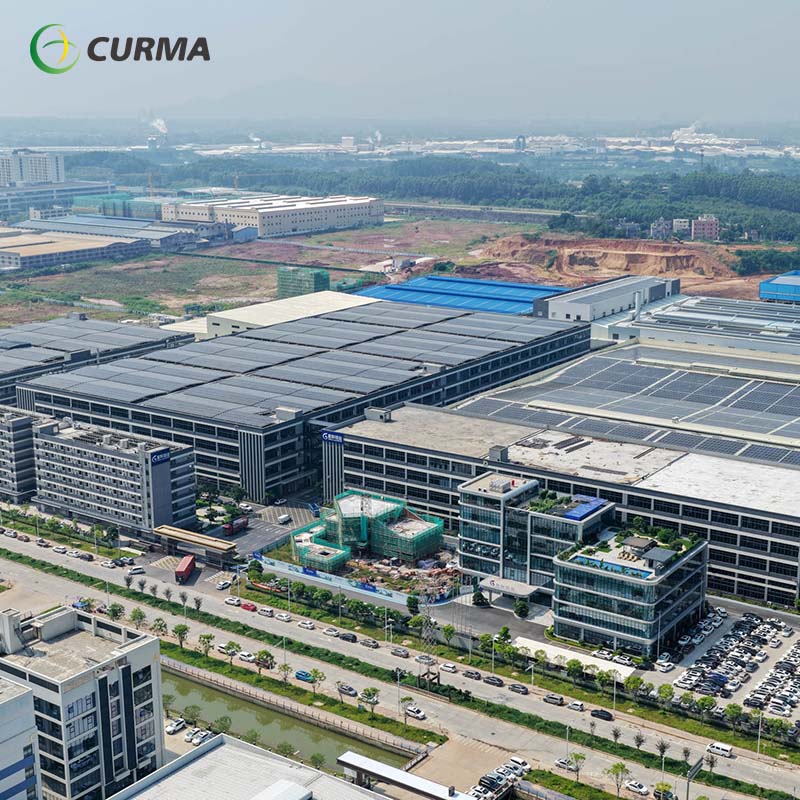
CURMA is a branch of XINGJI Group, ranked among China's Top 10 Aluminum Window & Door System Manufacturers. We operate three production facilities covering 400,000 square meters with over 2,000 workers. Our annual production capacity exceeds 40,000 square meters of windows per month, supported by more than 30 cutting machines.
But numbers alone do not make a great window. What matters is what happens on the factory floor.
The Aluminum Window—Our Core Competency
Andersen built its reputation on wood. CURMA built its reputation on aluminum window systems.
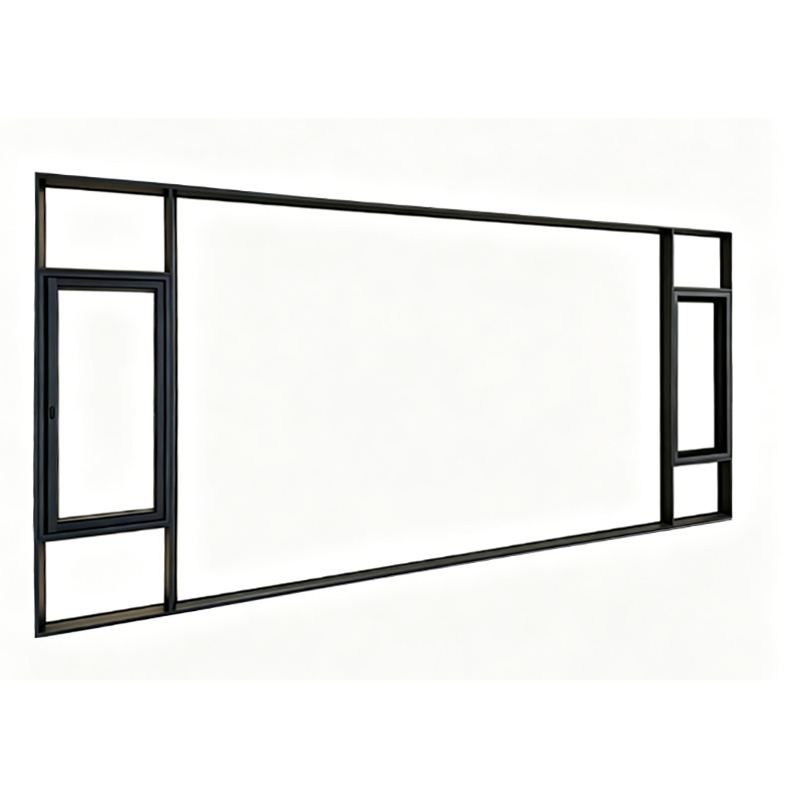
Why aluminum? Because aluminum offers the strength-to-weight ratio that wood cannot match, the corrosion resistance that steel cannot provide, and the design flexibility that modern architecture demands. Our aluminum window profiles are extruded from high-grade 6063-T5 and 6063-T6 alloys, precision-machined to tolerances that meet or exceed international standards.
Every aluminum window that leaves our factory undergoes a rigorous multi-stage quality control process. Raw material inspection checks alloy composition and surface quality. Extrusion monitoring ensures dimensional accuracy within ±0.05 millimeters. Aging treatment verifies mechanical properties including tensile strength and hardness. Surface finishing—whether anodized or powder-coated—undergoes thickness, adhesion, and corrosion resistance testing.
Double Glazed Windows—The Performance Standard
Andersen's Fibrex material delivers insulation through material science. CURMA delivers insulation through double glazed windows technology.
Our double glazed windows feature two panes of tempered glass separated by a warm-edge spacer system and filled with argon gas. The result is a window unit that significantly reduces heat transfer—U-values that compete with the best in the industry.
But here is what sets our double glazed windows apart: we produce the insulating glass units entirely in-house. From tempered glass processing to spacer application to gas filling and final sealing, every step happens under one roof. No subcontractors. No quality compromises. When we say our double glazed windows meet strict international standards, we know because we tested them ourselves.
And for projects that demand the ultimate in thermal performance, our double glazed windows can be upgraded to triple-glazed configurations. The flexibility is built into our production system.
Casement Window—A Design That Delivers
Among our product lineup, the casement window stands out as a customer favorite.
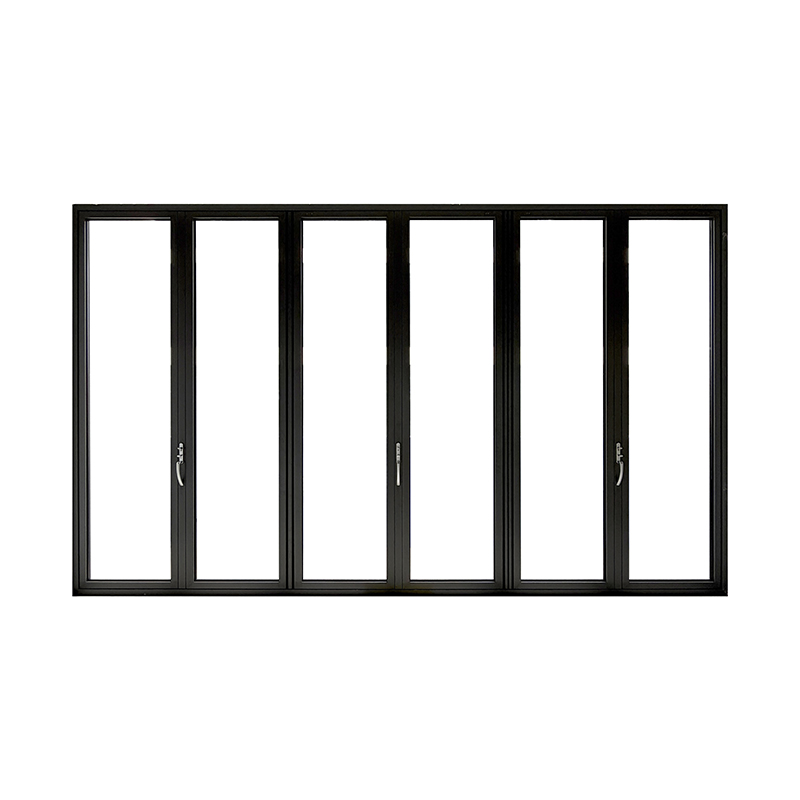
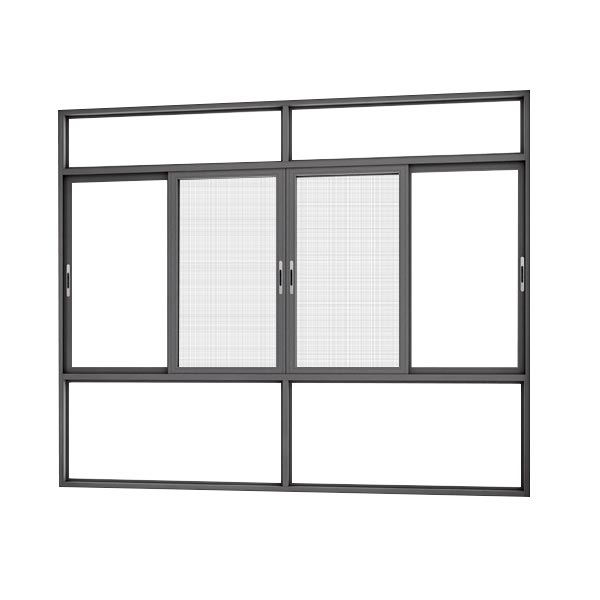
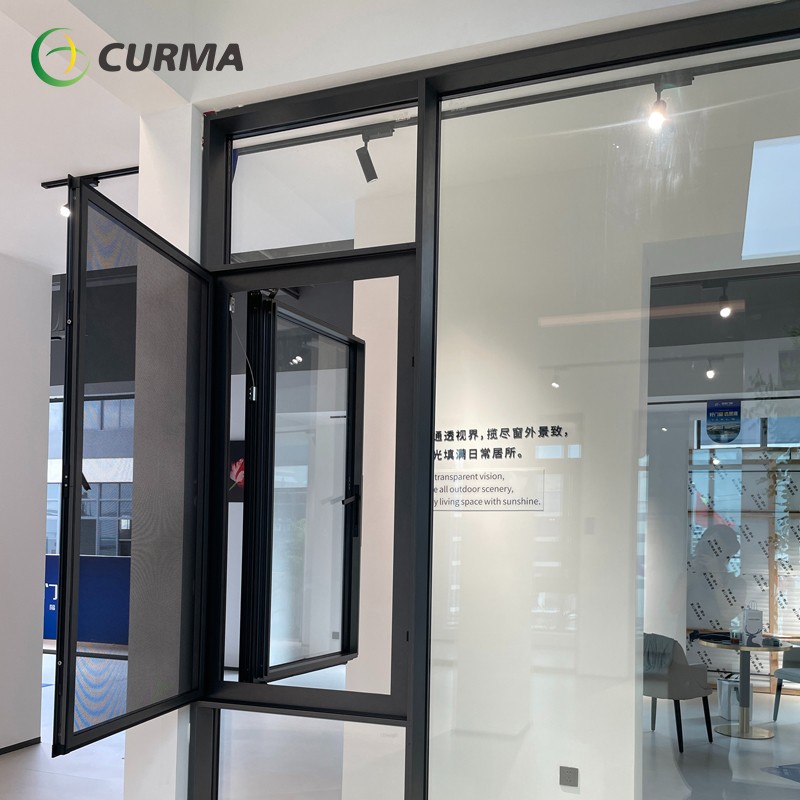
Why choose a casement window? Because it offers superior ventilation—the sash opens outward fully, catching breezes and directing them into the room. Because it provides an airtight seal when closed—the compression seal between sash and frame outperforms sliding windows in both air and water penetration resistance. It delivers unobstructed views—no vertical mullions, no horizontal rails, just clear glass.
Our casement window is engineered with multi-point locking hardware, stainless steel hinges, and precision-machined corners. The hardware alone undergoes 10,000-cycle durability testing—simulating decades of daily use. Every casement window is water-tested on our factory floor before it ships.
We do not just assemble casement window units. We engineer them.
Energy Efficient Windows—Built for a Warming World
The global market for energy efficient windows is expanding rapidly, driven by tightening building codes and rising consumer awareness. In California, Title 24-2025 limits whole-window U-values to 0.30 in warm zones and 0.25 in colder zones. In Europe, passive house standards demand even more.
Our energy efficient windows are designed to meet and exceed these requirements.
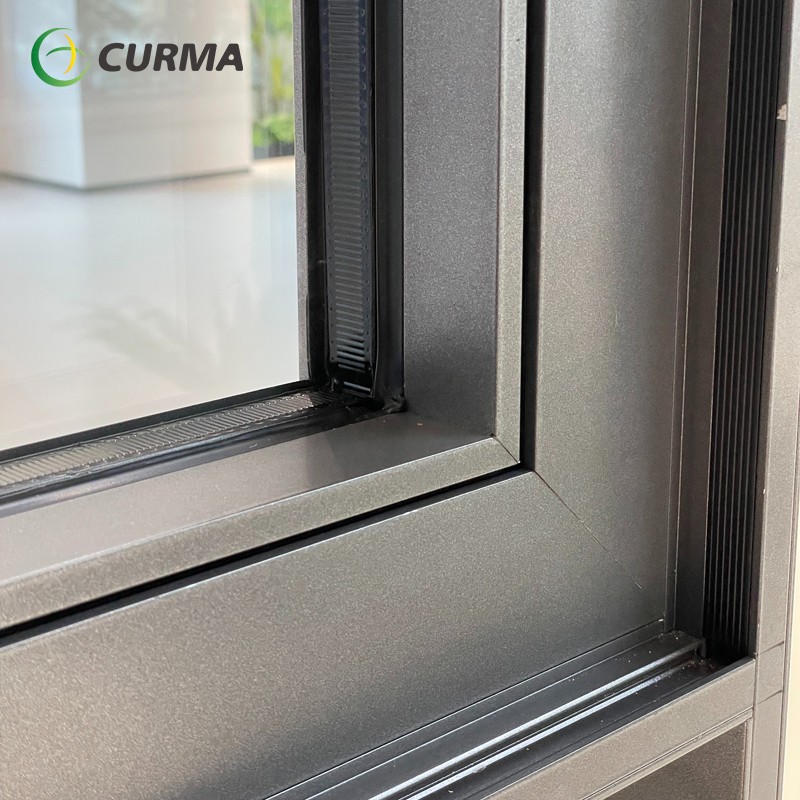
The thermal break technology in our aluminum profiles stops heat from traveling through the frame. The double glazed windows configuration with low-emissivity coatings reflects radiant heat back to its source. The argon gas fill reduces convective heat transfer within the cavity. The warm-edge spacer minimizes thermal bridging at the glass edge.
Taken together, these elements make our energy efficient windows a legitimate choice for green building projects, energy retrofits, and any application where operational costs matter.
And we test every energy efficient windows configuration in our own facility—not just at standard conditions, but at extreme temperatures that simulate real-world performance.
Tempered Glass—Safety Built In
Safety is non-negotiable. That is why every glass pane in our windows is tempered glass—unless the customer specifically requests laminated or annealed glass for specialized applications.
Tempered glass is four to five times stronger than standard annealed glass of the same thickness. When it breaks, it shatters into small, relatively harmless fragments rather than sharp, dangerous shards. This is not optional for us—it is standard.
Our tempered glass production line operates to strict thermal and mechanical specifications. The glass is heated to approximately 620 degrees Celsius, then rapidly cooled with high-pressure air. This process creates compressive stress on the surface and tensile stress in the core—the very mechanism that gives tempered glass its strength and safety characteristics.
Every batch of tempered glass is tested for fragmentation pattern and surface compression. We do not guess. We verify.
The Sustainability Question—Andersen and CURMA in Parallel
Andersen's Fibrex material is a sustainability story—40 percent reclaimed wood fiber from their own manufacturing waste. It is a brilliant example of circular manufacturing.
At CURMA, we have our own sustainability story. Our aluminum scrap from the production line is collected and returned to the smelter for recycling. Our glass off-cuts from tempered glass processing are recycled. Our packaging materials are selected for recyclability.
We may not have a patented composite material with 25 U.S. patents. But we share the same fundamental commitment: waste is not waste. It is a resource waiting to be used again.
And here is the difference: our sustainability is not a marketing story. It is a manufacturing reality that happens every day on our factory floor.
The Real Question—Is CURMA the Next Andersen?
Let us return to the question.
Is CURMA the next Andersen? The honest answer is no—not yet, and perhaps not ever. Andersen is a 120-year-old institution with a 9.5 percent market share, billions in revenue, and a brand that American homeowners trust. CURMA is a Chinese aluminum window manufacturer with 27 years of experience, three factories, and a growing international customer base.
But here is what we can say with confidence:
When you walk through our factory, you see the same attention to material science that built Andersen's reputation. When you test our double glazed windows, you see the same commitment to thermal performance. When you inspect our casement window hardware, you see the same obsession with durability. When you review our energy efficient windows test data, you see the same rigor. When you handle our tempered glass, you see the same dedication to safety.
We are not the next Andersen. We are the first CURMA.
And that is exactly what makes us worth your attention.
